
EduTalk: Good at Exams Doesn’t Mean Good at Learning
- Henry Maximus C

- Jun 22
- 3 min read
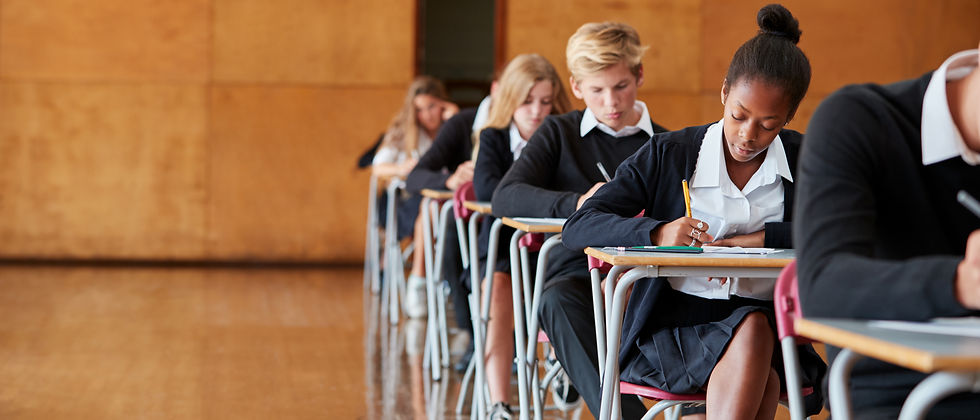
In many education systems, academic success is usually measured by one thing: exam performance.
Students who score highly are often perceived to be "smarter", while low scores are treated as signs of weakness or failure.
But being good at exams and being good at learning are not always the same thing.
Sure, a student can memorize information, follow patterns, and perform well under preset test conditions...yet they can still struggle with critical thinking, creativity, or even problem-solving in the daily life. High grades can measure performance, but they do not always measure understanding and application.
When Learning Becomes All About Memorization
In many classrooms, students are trained to prioritize results over understanding. Lessons thus become centered around:
memorizing facts
repeating model answers
practicing defauly question types
improving test performance
Learning may becomes less about curiosity and more about avoiding mistakes and securing scores. While students may become highly skilled at passing exams, they rarely develop deeper learning skills.
When education rewards correct answers more than deep, thoughtful questions, curiosity slowly disappears from students.
The Difference Between Studying and Learning
Studying is often very short-term. Students memorize information before an exam, simply recall it during the test, and then forget much of it afterward. All this becomes meaningless. This cycle may improve grades, but it does not always build lasting knowledge or real-world impacting skills.
Real learning, however, looks vastly different. It usually involves:
understanding concepts deeply
being able to connect ideas
applying knowledge in unseen situations
thinking critically
learning independently/autonomously
These are the abilities that students increasingly need in a rapidly changing world.
Why This Matters Even More in the AI Era
The rise of AI in education has made this issue even more important. Today, students can instantly search for information or even ask AI tools for explanations at their fingertips. Hard facts and answers are no longer that difficult to access.
As a result, memorization is becoming way less valuable. What truly matters now is whether students know how to:
properly evaluate information
think critically
adapt knowledge to new situations
solve problems out of the box
In a world where information is everywhere, the ability to think critically matters significantly more than the ability to memorize.
The Pressure Teachers Face
This problem is not only caused by students, but teachers and administrators as well. Many teachers may also be trapped inside these exam-focused education systems. Schools more than often prioritize grades, rankings, and measurable outcomes, leaving educators with very limited freedom to slow down or explore ideas more deeply.
Even teachers who truly want to encourage creativity or deep discussion, may feel pressured to “teach to the test” ultimately due to pressure. Classrooms can then become increasingly standardized and predictable.
A Better Question for Education
Perhaps the most important question is not: “Did students pass the exam nicely?”
But rather this: “Did students become better learners?”
Because long after they finished school, these students will still need to adapt, grow, and continue learning in the real world. The pursue of success is a life-long goal. After all, we educators want students to be capable long after they graduate from school, right?
And that ability, can never be measured by grades alone.
IPPAcademy | Professional Development for Modern Educators and Teachers
Educators, want to step up your teaching game? Here at IPPAcademy, we support educators through professional development courses focused on:
AI in education
ESL teaching strategies
practical classroom management skills
modern teaching methods


Comments